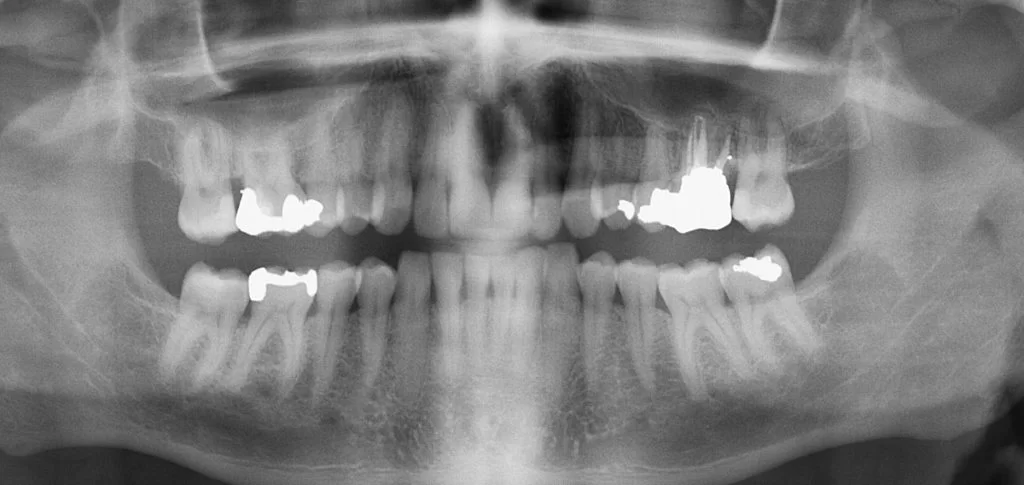
In modern dentistry, what we cannot see is just as important as what we can. Digital radiography has revolutionized the way we diagnose dental issues, moving away from traditional film-based X-rays that required long waiting times and chemical processing. By using high-sensitivity digital sensors, we can now capture crystal-clear images of your teeth, roots, and jawbone instantly, allowing for a much higher degree of diagnostic accuracy.
At Dr. Patel's Dental Care, we utilize both **Digital RVG (RadioVisioGraphy)** for detailed single-tooth analysis and **OPG (Orthopantomogram)** for a comprehensive, panoramic view of your entire mouth. An OPG is essential for complex procedures such as dental implants, wisdom tooth extractions, and orthodontic planning, as it provides a 2D panoramic view of the upper and lower jaws, including the sinuses and the temporomandibular joints (TMJ).
Safety First: One of the most significant advantages of our digital imaging system is the drastic reduction in radiation exposure—up to **80% to 90% less radiation** compared to traditional X-rays. Furthermore, because the images are digital, we can enlarge and enhance them on a chairside monitor to show you exactly what is happening inside your mouth. This transparency helps you make informed decisions about your treatment with complete confidence and peace of mind.